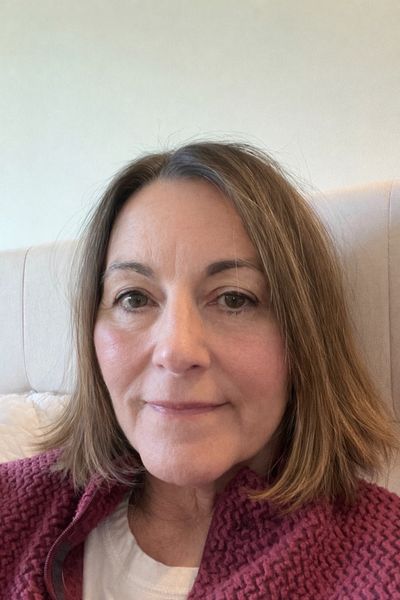
I'm one in a million. Appendix Cancer Chose Me.
My cancer story.
Before I asked my most pressing question, my surgical oncologist answered it.
“Helene,” he said, “This is not your fault. There is nothing you did to cause this cancer.”
Three weeks later, I was in an operating room at Mercy Hospital, undergoing the surgery that would extend my life.
Cytoreductive Surgery with Hyperthermic Intraperitoneal Chemotherapy, known simply as CRS with HIPEC. is among the most aggressive treatments used for advanced abdominal cancers. The procedure begins with hours of meticulous surgery to remove every visible tumor from the abdominal cavity. Once that work is complete, the abdomen is then bathed with heated chemotherapy, circulated directly where cancer cells may remain, targeting microscopic disease that cannot be seen or cut away.
The goal is nothing short of long-term control and sometimes a cure by confronting the cancer at its source, in the very space where it spreads.
It is a brutal procedure. And it is also an act of hope.
My cancer originated in my appendix, and like most people who develop this rare disease, it was discovered by chance. It is estimated to affect roughly one in 1,000,000 people worldwide. It does not discriminate by age, gender, or ethnicity.
I have always joked that I was the healthiest person in my family. Before my diagnosis, I played golf three times a week, usually walking the course, rode horses, gardened, hiked, and traveled the world. I was strong. I was active. I felt well.
After years of working long hours as an IT consultant, caring for aging parents, raising two boys, and later caring for my husband through early-onset Alzheimer’s disease, I believed, perhaps naïvely, that I had finally arrived at a chapter meant for living.
I thought I still had time.
In the summer of 2025, I began to notice a subtle pressure beneath my right rib cage, a fullness I couldn’t explain. My doctor ordered blood tests, which all came back normal. Still, I knew something wasn’t right, and I asked for further testing.
What followed was a chest X-ray, an ultrasound, and three CT scans. It was an informed radiologist who finally saw what others had missed: a tumor on my appendix and mucin filling my abdominal cavity. He immediately contacted my doctor and urged her to refer me to an oncologist.
That moment changed everything.
I met with my first oncologist at a world-renowned hospital. He recommended a biopsy, followed by chemotherapy or possibly surgery.
After doing my own research, I learned that appendix cancer that has spread to the abdomen is often treated with CRS with HIPEC. When I asked about this option, I discovered he had some experience with the procedure, performing it about once a month over the past few years.
Something about his approach made me uneasy. Rather than discussing whether I was a good candidate or sharing the outcomes, I felt he was trying to convince me to choose him.
Trust matters when the stakes are this high. The five-year survival rate for this advanced cancer is 10% to 50%, meaning the percentage of people still alive a certain number of years after diagnosis.
That same day, I decided to seek a second opinion, though I had no idea how I would find the right surgeon. My stepdaughter suggested I look for a Facebook group dedicated to this cancer.
That search led me to the PMP Appendix Cancer Support Group, a community created specifically for people diagnosed with appendix cancer and their caregivers. I was accepted almost immediately and posted what I knew about my condition.
Within minutes, members began responding, sharing stories of misdiagnosis, delayed treatment, and hard-won lessons. Again and again, they urged me to consult a true specialist. Several names surfaced repeatedly, including my future surgeon, Dr. Sardi, along with a small number of others across the United States.
For the first time since my diagnosis, I felt something shift.
I was no longer alone, and I knew what I needed to do.
I visited Dr. Sardi’s website and submitted a contact form. Within two hours, his office called me back and scheduled a consultation for the following day. Through their patient portal, I uploaded my medical records and CT scans.
When I arrived, a nurse took my vitals, and a physician's assistant reviewed my history and prepared me for the exam. Dr. Sardi was methodical and focused in the questions he asked. Then we sat down.
With calm confidence, he said that surgery was the only effective treatment. Intravenous chemotherapy, he explained, does not work for this disease.
He opened a binder filled with photographs of open abdominal surgeries, images of the cancer itself, and detailed illustrations of how the procedure would be performed. He explained that the operation would take eight to ten hours. He described which organs might need to be removed, including the bladder and colon, and how the heated liquid chemotherapy would be administered directly into the abdomen, what the ICU stay would involve, how long I would likely remain in the hospital, and what recovery would look like in the months that followed.
I was surprised by my reaction. I expected to be emotional or overwhelmed, but I was not. I attended this appointment alone, despite friends encouraging me to bring someone else along to listen in. I was confident I could make a good decision without the distraction of someone else’s worry. Dr Sardi shared the unvarnished truth about the road ahead. It would take courage and a stubborn commitment to recover physically, and the psychological toll can be demanding.
Without hesitation, I asked him when he could schedule the surgery.
He glanced at his calendar and said, “I have an opening in three weeks.”
“I’ll take it,” I replied.
In the three weeks that followed, there was much to prepare. In addition to a preoperative appointment with my primary care physician, I had to arrange caregivers. Recovery from this, truly the mother of all surgeries, is long and demanding, often taking a year to fully recover.
My mom always believed in divine intervention. A few years ago, I moved to New Hampshire to be near family there. I found the winters brutal, so in early 2025, I started looking for a place in the Mid-Atlantic region with a golf course. I almost purchased my “leisure lady” condo in South Carolina, but I found the perfect spot on Maryland’s Eastern Shore, just 90 minutes from the surgery. Who knew I’d need it?
I reached out to friends and family. My sister and niece, who live in Australia, responded immediately. They said they would drop everything and take turns staying with me. My sister came for two months; my niece for one. My son, who lives in Norway, will join me after that for a month, and then I’ll return to my home in New Hampshire, where my other son will monitor my recovery.
Without my family’s help, I would have been discharged to a rehabilitation facility. Even now, twelve weeks post-op, I am not yet able to live on my own. I can’t imagine how hard this must be for others who need to work or care for children. I wouldn’t have been able to do either.
I created a WhatsApp group so my son could keep my support network informed of my progress. The messages came steadily, prayers, encouragement, and simple, powerful words: you are strong, you are resilient, you are brave, you will beat this.
I also updated my new friends on the Facebook cancer page and received dozens of responses, practical, generous, and hard-earned. They shared advice on how to prepare, what to bring to the hospital, and what to expect during recovery.
I also met a woman who was scheduled to have the same procedure at the same hospital one week before me. She was in her thirties and had just delivered her second child when the cancer was discovered. My heart went out to her, knowing the difficult road to recovery ahead and the ever-present risk of recurrence.
I have lived a good, long life. I worried more for her than for myself and felt a deeper sadness for what she stood to lose.
She is recovering well, and it has been a comfort to know that we can share ideas and compare notes as we move through recovery. I met her the day I was admitted to the hospital, and she looked remarkable, especially considering she was only six days post-op.
She gave me hope.
Since then, we’ve shared similar ups and downs. In my case, the surgeons removed my gallbladder and appendix, as well as my spleen and part of my liver. They resected a portion of my colon and scraped both my diaphragm and abdominal wall. After eight hours of surgery, I woke up to a noisy ICU and was quickly joined by a high school friend. We hadn’t spent a great deal of time together in 50 years, but when she learned of my illness, she was there. Over the next nine days, other friends and family members were there to support me.
The incision in my abdomen went from my breastbone to my pelvis. My abdomen was held together with 42 staples. I had five tubes in my chest that drained into pouches or collection boxes. There was an IV port in my neck, a catheter for urine, and a stomach tube through my nose. Medicine dulled the physical pain. At the time, my mind was calmly focused moment to moment. I felt no regret, no remorse, no sadness, no worry, just gratitude that I was still alive.
The next day, I was moved to a private room on a floor dedicated to oncology patients. The minutes dragged as I lay in bed, dully absorbing the assault my body had endured. Nights and days blurred into a continuous cycle of pain management and vital sign checks. I was disinterested in reading or watching TV, but I did enjoy visits from friends and family, during which I mostly sat in silence, appreciating the comfort of their company.
Each day had a single goal: to get out of bed and walk. I pushed myself down the hallway with a portable IV pole and fluid drainage boxes as constant companions. I kept moving, buoyed by the quiet mantra of my friends: you are brave, you are strong, you are a fighter.
Although I am an introvert who enjoys being alone, I came to understand the value of letting people know what I was going through. There are many reasons someone might choose not to share a cancer diagnosis, from fear of pity to the loss of control over their own health narrative.
While I was grateful for the emotional support, there was also a cost. Sharing my diagnosis placed a burden of worry and uncertainty on friends and family, an added weight I carried alongside my own.
Progress came steadily. Each day, another tube was removed. Gradually, the pain eased, and attention shifted to nourishment and digestion. There were small but expected setbacks, like the day I required a blood transfusion because my hemoglobin levels dropped.
And then came the news that every cancer patient wants to hear: the cancer has been removed, lymph nodes and margins are clear. I went from a PCI score of 34 out of 39 to 0. The Peritoneal Cancer Index (PCI) is a numerical score (0-39) used to quantify the extent of cancer spread (metastasis) on the peritoneal surface in the abdomen and pelvis, particularly in colorectal, ovarian, and appendiceal cancers. Many surgeons won't operate on someone with a PCI score as high as mine. I was lucky that Dr. Sardi took my case.
I was released from the hospital on a bright, sunny November day. As we drove across the Chesapeake Bay Bridge, my heart lifted with the possibility of a future free of cancer. Sunlight sparkled on the water below, carrying me back to the years when my late husband and I sailed these same waters between Annapolis and Oxford, joyful, uncomplicated days.
For the first time in nearly two weeks, I felt a powerful emotion again: hope.
Hope does not make promises; it opens possibilities. And sometimes, that is everything.